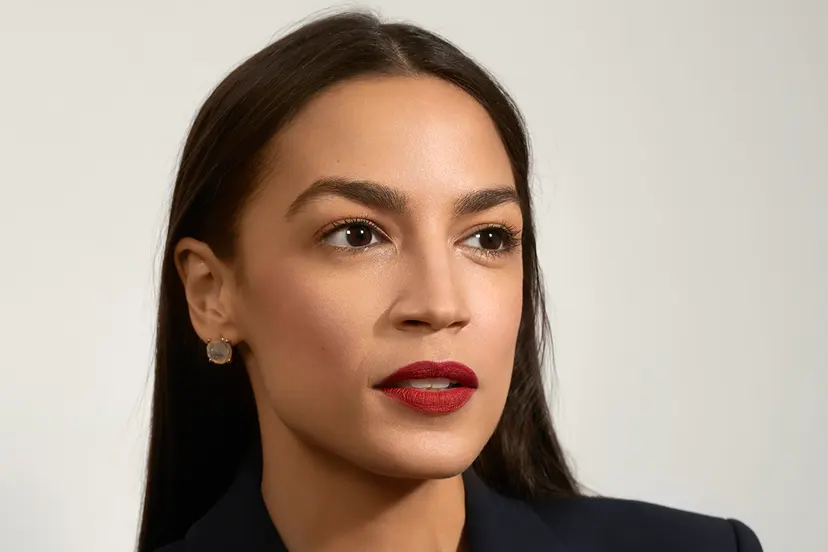
Alexandria Ocasio-Cortez has become a prominent figure on the national political stage. Whether you agree with her positions or challenge them, her rise from community organizer and bartender to congresswoman is worth examining—a story that touches on identity, opportunity, and the changing face of American leadership. As 2028 approaches, speculation about her political future raises a question: Is she eyeing the presidency?
Alexandria Ocasio-Cortez, known across the country as AOC, entered national politics with a story that challenged familiar expectations about who gets to govern. A New Yorker of Puerto Rican heritage, she moved from restaurant work and community organizing to the United States House of Representatives. Her rise brought renewed attention to economic inequality, political representation, and the experiences of people whose lives rarely resemble those of Washington’s traditional power brokers.
Born on October 13, 1989, in the Bronx, Ocasio-Cortez grew up within a family connected to both New York and Puerto Rico. Her father, Sergio, was a Puerto Rican architect and a Bronx native. Her mother, Blanca, was born in Puerto Rico and worked as a home cleaner. When Alexandria was young, the family moved to Yorktown Heights in Westchester County for better educational opportunities while maintaining ties to relatives in the Bronx.
That movement between communities became central to her understanding of opportunity. The distance between the Bronx and suburban Westchester was relatively short, but the differences in resources were substantial. Her upbringing raised a question that would later shape her politics: why should a child’s address so strongly influence the education and opportunities available to them?
Ocasio-Cortez graduated from Boston University in 2011 with a degree in economics and international relations. During college, she interned in Senator Ted Kennedy’s office, where immigration concerns brought her into contact with families navigating complicated federal systems. The experience connected public policy to personal consequences, including the uncertainty people face when trying to locate detained relatives. It also gave her an early view of how congressional offices can help constituents.
Her college years were marked by personal loss. Her father died in 2008, leaving the family confronting grief and financial pressure. After graduation, she returned to New York and worked as a waitress and bartender while participating in educational and community projects. These experiences later became central to her public identity: a college graduate who understood that education did not automatically provide economic security.
Her political involvement expanded as she organized for Bernie Sanders’s 2016 presidential campaign and attended the protests at Standing Rock. In 2018, she challenged Representative Joe Crowley in the Democratic primary for New York’s 14th Congressional District. Crowley was a powerful incumbent with years of institutional support. Ocasio-Cortez’s campaign relied on volunteers, neighborhood outreach, and a message centered on working people.
Her primary victory became one of 2018’s defining political surprises. She won the general election that November and entered Congress in January 2019 at age twenty-nine, becoming the youngest woman ever elected to Congress. Representing a district spanning communities in the Bronx and Queens, she brought national visibility to a campaign that began far outside the political establishment.
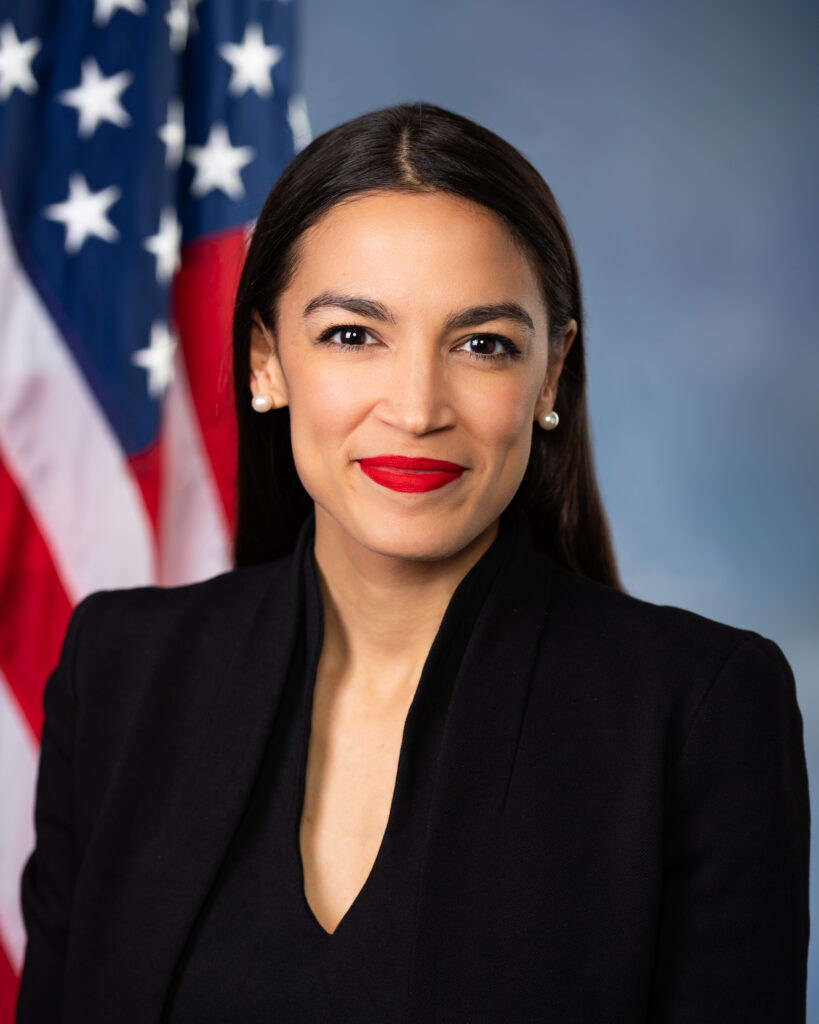
In Washington, Ocasio-Cortez established herself as a prominent progressive Democrat. Her agenda has included Medicare for All, affordable housing, stronger labor protections, and expanded access to education. She presents these priorities as connected responses to economic insecurity. Her proposals also spark debate over government spending, taxation, and the federal government’s role in providing essential services.
One of her best-known initiatives is the Green New Deal resolution, introduced with Senator Edward Markey in February 2019. The proposal connected climate action with jobs, infrastructure, and economic justice. It was a framework for national mobilization, rather than a law implementing those changes. Its importance lies partly in how it linked environmental policy to questions about wages, public investment, and communities facing disproportionate pollution.
Puerto Rico also occupies a meaningful place in her legislative priorities. Ocasio-Cortez has supported a process that would let the island’s residents determine their political future. Her position emphasizes self-determination and alternatives to the existing territorial arrangement. This work connects her family heritage to an ongoing debate over democratic participation, political status, and Puerto Rico’s relationship with the federal government.
On immigration, she has advocated protections for immigrant communities and challenged detention and deportation practices. Her congressional work includes pressing federal officials for accountability in individual cases. These positions place her within wider national disagreements about enforcement, humanitarian obligations, and how immigration policy should operate.
Her influence also reflects her ability to communicate beyond congressional hearings. Through social media and interviews, she explains policy in accessible language and speaks directly to audiences who may not follow traditional political coverage. Supporters see her as candid and accessible; critics question her approach and the practicality of her agenda. Both reactions have helped make her a highly visible national figure.
As of October 2026, Ocasio-Cortez serves on the House Committee on Energy and Commerce, with assignments covering energy, health, and oversight. These responsibilities put her at the center of debates over household costs, healthcare, and federal policy.
Her biography remains unfinished. The former bartender from New York is now an established legislator whose record deserves examination alongside her public image. Whatever readers think of her politics, her journey offers a notable example of how community experience, cultural identity, and grassroots organizing can open a path into national leadership.
Her trajectory also invites a broader conversation about representation: whose experiences inform public decisions, which barriers keep potential leaders outside government, and how voters evaluate the people entrusted to speak on their behalf.
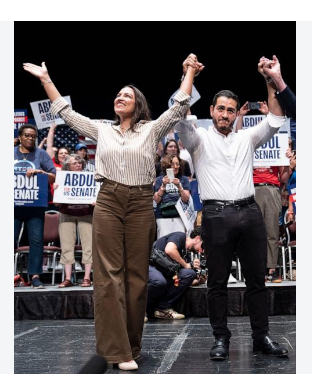
Michigan Senate Candidate Abdul El-Sayed
As the November 3, 2026, midterm elections approach, Ocasio-Cortez’s role extends beyond her own reelection campaign in New York. She is also working to strengthen the Democratic Party’s progressive wing, including by endorsing Abdul El-Sayed, Michigan’s Democratic nominee for the United States Senate. Her support and campaign appearances alongside him reflect their shared emphasis on healthcare access, economic security, and greater accountability to working families. With control of Congress at stake, her involvement illustrates her evolution from an outsider challenging the political establishment into a national figure helping shape her party’s priorities and supporting a new generation of candidates.