Latino Political Power, Urban Reform, and the Transformation of East Harlem
Abstract
The emergence of Latino political leadership in the United States during the twentieth century represented a transformative shift in American urban politics, civil rights advocacy, and community empowerment. Among the most significant figures in this movement was Herman Badillo, the first Puerto Rican-born member of the United States Congress. Rising from the streets of East Harlem, commonly known as El Barrio, Badillo became a symbol of Latino political visibility, educational advancement, and urban reform. His work in housing, education, economic development, and civil rights advocacy reflected broader struggles faced by Latino communities throughout the United States. This article examines Badillo’s historical significance, his impact on East Harlem, and his enduring legacy as a pioneer of Latino empowerment in American public life.
Introduction
The history of Latino political empowerment in the United States cannot be fully understood without examining the contributions of Herman Badillo. At a time when Latino communities were often politically marginalized, economically disadvantaged, and socially invisible, Badillo emerged as a groundbreaking figure who challenged institutional barriers and demanded representation for Puerto Ricans and other Latinos within American political systems.
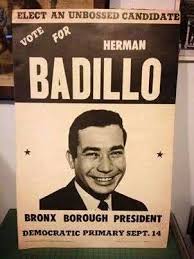
Born in Puerto Rico and raised in East Harlem, Badillo’s life reflected the broader migration experience of thousands of Puerto Rican families who relocated to New York City during the twentieth century in search of economic opportunity (Sánchez Korrol & Escobar, 2019). East Harlem, often referred to as El Barrio, became a center of Puerto Rican identity, activism, and cultural resilience. However, it was also a community deeply affected by poverty, overcrowded housing, unemployment, and educational inequities.
Badillo’s political and social advocacy emerged directly from these lived realities. Rather than distancing himself from the struggles of his community, he transformed those experiences into a lifelong commitment to social justice, civic participation, and Latino advancement.
Early Life and Educational Achievement
Herman Badillo was born in Caguas, Puerto Rico, in 1929 and moved to New York City as a child after the death of his parents. Raised in East Harlem by relatives, Badillo experienced firsthand the structural inequalities confronting Puerto Rican migrants during the mid-twentieth century (Thomas, 2010).
Despite economic hardship, Badillo excelled academically. He attended the City College of New York and later earned a law degree from Brooklyn Law School. His educational achievements were particularly significant during a period when access to higher education for Latinos was severely limited due to systemic discrimination, language barriers, and economic inequality.
Badillo’s success symbolized more than individual achievement; it represented the possibility of upward mobility and political participation for an entire generation of Puerto Rican Americans struggling for recognition within American society.
East Harlem and the Puerto Rican Experience
East Harlem served as both the foundation of Badillo’s political identity and the focal point of much of his advocacy work. During the mid-twentieth century, East Harlem became one of the largest Puerto Rican communities in the continental United States. The neighborhood was rich in cultural identity but plagued by deteriorating housing conditions, underfunded schools, health disparities, and limited economic opportunities (Flores, 2000).
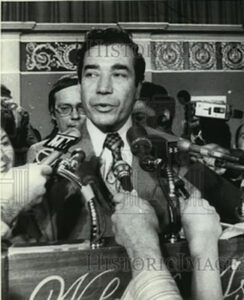
The migration of Puerto Ricans to neighborhoods like East Harlem fundamentally altered the social and political landscape of New York City. Yet despite their growing numbers, Puerto Rican residents often lacked political representation and institutional power. Public policies affecting housing, education, and employment were frequently developed without meaningful Latino input.
Badillo recognized that political representation was essential for addressing these inequities. His rise within New York politics marked a turning point in the struggle for Latino political visibility and community empowerment.
Political Leadership and Congressional Significance
In 1970, Herman Badillo became the first Puerto Rican-born member of the United States Congress. This historic achievement represented a major milestone for Latino political participation in the United States (Center for Puerto Rican Studies, 2022).
Badillo’s election carried symbolic and practical significance. Symbolically, it demonstrated that Latinos could achieve positions of national political influence despite longstanding exclusion from traditional power structures. Practically, it provided Latino communities with an advocate capable of addressing issues directly impacting urban neighborhoods such as East Harlem and the South Bronx.
Throughout his political career, Badillo consistently emphasized:
- affordable housing,
- educational access,
- civil rights,
- economic development,
- and equitable public services.
His advocacy reflected a broader understanding that urban poverty was not simply an individual problem but the product of systemic inequality and political neglect.
Housing Advocacy and Urban Reform
One of Badillo’s most important areas of focus involved housing justice and urban development. During the 1960s and 1970s, neighborhoods like East Harlem experienced severe housing deterioration, overcrowding, and landlord neglect. Many Latino families lived in unsafe buildings while simultaneously facing displacement pressures linked to urban redevelopment and gentrification.
Badillo advocated for policies designed to expand affordable housing and protect vulnerable residents from displacement. He supported government investment in urban communities while criticizing development practices that ignored the needs of working-class residents.
His work reflected broader debates occurring throughout American cities concerning urban renewal, racial inequality, and community control. Scholars have noted that many urban renewal programs disproportionately harmed minority communities by displacing residents without providing adequate replacement housing (Fullilove, 2004).
Badillo argued that communities themselves should play a central role in shaping neighborhood development and public policy decisions.
Education and Latino Empowerment
Education remained central to Badillo’s vision of Latino advancement. He viewed educational opportunity as a critical mechanism for breaking cycles of poverty and expanding civic participation.
Badillo strongly supported bilingual education programs, recognizing the importance of cultural identity and language preservation within immigrant and Puerto Rican communities. His advocacy challenged assimilationist models that often stigmatized Spanish-speaking students and ignored cultural diversity within public schools.
Research consistently demonstrates that culturally responsive education improves educational engagement and academic outcomes among minority populations (Nieto, 2018). Badillo’s support for bilingual education anticipated contemporary discussions concerning equity, representation, and multicultural learning environments.
In addition to policy advocacy, he supported youth development initiatives, mentorship opportunities, and educational access programs intended to increase college enrollment and professional advancement among Latino youth.
Cultural Identity and Latino Visibility
Beyond politics, Herman Badillo understood the importance of cultural identity in community empowerment. East Harlem was not merely a geographic location; it was a center of Puerto Rican music, language, art, activism, and collective identity.
Badillo supported efforts to preserve Latino cultural institutions and promote recognition of Puerto Rican history within educational and public spaces. This emphasis on cultural affirmation was particularly important during periods when Latino communities were frequently stereotyped or rendered invisible within mainstream American narratives.
The preservation of cultural identity functioned as both resistance and empowerment. Cultural celebrations, public festivals, and artistic expression reinforced community solidarity while challenging exclusionary notions of American identity.
Legacy and Historical Importance
The legacy of Herman Badillo extends far beyond East Harlem. His career helped pave the way for future generations of Latino elected officials, activists, educators, and civic leaders.
Today, Latino political representation in the United States continues to expand, yet many of the structural challenges Badillo confronted remain relevant, including:
- housing inequities,
- educational disparities,
- economic inequality,
- immigration debates,
- and racial discrimination.
Badillo’s life demonstrates how political participation and community advocacy can serve as mechanisms for systemic change. His story also illustrates the broader evolution of Latino identity and political power within the United States.
For East Harlem, Badillo remains a symbol of resilience, representation, and hope. His work helped establish the principle that Latino communities deserve not only visibility, but full participation within the political, economic, and cultural life of the nation.
Conclusion
Herman Badillo occupies an essential place in the history of Latino political empowerment in the United States. Emerging from the challenges of East Harlem, he transformed personal experience into public service and became a national voice for marginalized communities.
His advocacy in housing, education, civil rights, and urban reform reflected a broader struggle for dignity and inclusion among Puerto Rican and Latino populations throughout the country. More importantly, his legacy continues to inspire contemporary movements seeking equity, representation, and social justice.
As debates surrounding immigration, identity, urban inequality, and political participation continue to shape American society, the life and work of Herman Badillo remain profoundly relevant. His career stands as a reminder that Latino history is not peripheral to the American story—it is central to it.
References
Center for Puerto Rican Studies. (2022). Puerto Rican leadership and political history in New York City. Hunter College, City University of New York. https://centropr.hunter.cuny.edu/
Flores, J. (2000). From bomba to hip-hop: Puerto Rican culture and Latino identity. Columbia University Press.
Fullilove, M. T. (2004). Root shock: How tearing up city neighborhoods hurts America, and what we can do about it. One World/Ballantine Books.
Nieto, S. (2018). Language, culture, and teaching: Critical perspectives (3rd ed.). Routledge.
Sánchez Korrol, V., & Escobar, K. (2019). Latinos in New York communities. Arcadia Publishing.
Thomas, L. (2010). Puerto Rican citizen: History and political identity in twentieth-century New York City. University of Chicago Press.